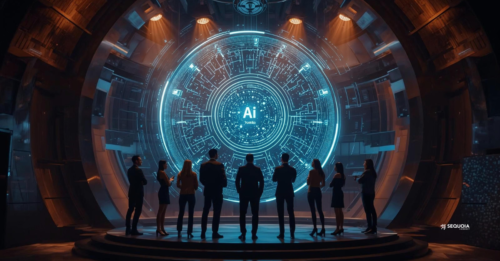



I was in a boardroom last week in Mexico City with a CTO of a global fintech—let’s call her Elena. Elena had just authorized a multi-million dollar investment in Enterprise AI Transformation. She had the licenses, the cloud credits, and the latest LLM integrations. Yet, when we looked at the actual output, the needle hadn’t moved.
Elena’s team was navigating a high-speed professional evolution, but they were doing it in silos. On one side, she had the “Explorers”—early adopters who had integrated AI tools overnight. On the other, she had the “Deep Architects”—veteran engineers rightfully cautious about the long-term integrity of AI-generated code.
Elena’s story isn’t an outlier; it’s the industrial standard. Recent research reveals that 80% of AI projects fail to reach production or deliver real value [1]. Even more staggering, findings from the RAND Corporation suggest this figure rises to 95% in pilot phases when the initiative lacks a strategic business focus and proper talent architecture [2]. At Sequoia Connect, we see this gap widening every day. It’s not happening because tech teams are failing; it’s happening because the role of the technologist is evolving faster than our organizational frameworks. We are witnessing the move from being Masters of Code to Masters of Intent.
The Evolution Gap: Why Organizations are Stalling
The primary reason for this systemic friction is that most companies treat Enterprise AI Transformation as a software update rather than a cultural and strategic evolution.
Look in the mirror for a moment. Data shows that 84% of AI failures are not technical; they are attributed to leadership gaps, misaligned objectives, and an inability to manage human change [3]. If your leadership team is still measuring success by the number of licenses deployed or the raw speed of code commits, you are likely looking at the silhouette of a pending failure. The most dangerous place to be in 2026 is the “Comfort Zone of Technical Noise,” where you feel productive because the engines are humming, but the output is drifting further away from your actual business architecture.
If your veteran architects are quietly disengaged and your early adopters are shipping fragile, unvetted solutions, you are accumulating a new breed of technical debt that will bankrupt your agility by 2027. Through our IT Advisory work alongside leaders like Elena, we’ve identified four critical pivot points where technical mastery must evolve:
The Evolution of Technical Mastery The challenge isn’t the code; it’s the shift to high-fidelity Prompting and Orchestration. Developers must master Architectural Intent. This transition requires a new layer of Human Performance Competencies—resilience, strategic negotiation, and Radical Ownership—to vet AI output. It’s not about doing less; it’s about leading the machine with human judgment.
The Agnostic Logic Shift Many fall into the “Tool-Dependency Trap,” focusing on specific platforms rather than mastering the underlying logic of AI Foundations. An evolved technologist doesn’t just use a tool; they understand the “Why” behind the model, allowing them to pivot between platforms (Cursor, Copilot, ChatGPT) without losing their edge.
Navigating the Psychological Transition In tech hubs across LATAM, “Replacement Anxiety” creates silent resistance. We must evolve the mental model from “Code-as-Value” to “Strategy-as-Value.” When teams realize AI is an extension of their expertise rather than a replacement for it, innovation replaces sabotage.
The Strategic Alignment Gap Without a link to the organization’s core Purpose, even the most advanced technical work becomes “technical noise” instead of business value.
The Collaborative Path: Executing Elena’s Evolution
At Sequoia Connect, we don’t believe in “dropping off” a solution and walking away. We believe that an Enterprise AI Transformation is a shared execution. When we sat down with Elena, we didn’t just give her a manual; we joined her team in the trenches to execute a roadmap tailored to her specific fintech reality:
Phase 1: Co-Creating Elena’s Strategic North Star We moved the conversation from cloud credits to purpose. By aligning her C-Suite on tactical commitment, we ensured every line of code written had a direct link to the company’s growth.
Phase 2: Upgrading the ‘Human OS’ through Radical Ownership We worked to dismantle “Replacement Anxiety,” replacing it with a culture of Radical Ownership. We focused on the competencies that automation cannot replicate: strategic negotiation of requirements and the architectural judgment needed to vet AI outputs. We helped Elena’s coders realize they weren’t being replaced—they were being promoted to Orchestrators.
Phase 3: Building Tool-Agnostic Foundations for the Team To prevent the “Tool-Dependency Trap,” we executed a transition toward “Intent-Based Engineering.” We built tool-independent foundations so they understood the underlying logic of LLMs. Now, Elena’s team remains agile; they possess the Communication Mastery to drive results on any platform.
Phase 4: Scaling through AI-Augmented Co-Creation Finally, we scaled the transformation by building collaborative, AI-Augmented Agile Squads alongside her staff. Working in “Test & Fail Fast” sprints, we turned her theoretical foundations into production-ready MVPs. By the time we finished this phase, Elena didn’t just have an “AI strategy”—she had a high-performance engine delivering tangible industrial value.
The most profound shift in Elena’s organization wasn’t the speed of the processes; it was the atmosphere in the room. By the end of our journey, the fear of replacement had dissolved into the thrill of empowerment. The team realized that AI isn’t a threat to their expertise—it’s the ultimate leverage for it. They moved from the tactical anxiety of “surviving” to the strategic mastery of “orchestrating.” This is the true evolution of a tech powerhouse: an organization where humans lead with intent, and technology serves as the high-fidelity multiplier of their vision.
The Verdict: The ROI of Talent in 2026
The era of the “Pure Coder” is evolving into the era of the Technical Architect. Data shows that mature adopters are achieving an ROI of $3.70 for every dollar invested [4] and reducing development times by up to 55% [4].
The gap between a failed experiment like Elena’s initial investment and a market leader is found in the ability to bridge technical wisdom with AI orchestration. It’s time to stop making technical noise and start building industrial value through a partnership that prioritizes your people.
Ready to turn technical noise into market leadership? We invite you to explore our ATLAS Enterprise AI Transformation & Strategy solution and discover how our 4-phase roadmap can bridge your organization’s evolution gap through a shared execution model.
Guiding the Way: Community Advice and Questions
The market is shifting rapidly, and collective insight is more important than ever. We want to hear from you.
💬 How are you evolving your team’s definition of “Seniority” in an AI-augmented environment?
💬 Aside from technical skills, what Human Performance Competencies (like resilience or negotiation) do you find most critical for your senior developers this year?
💬 What is the biggest roadblock you’ve faced when trying to move an AI prototype into a production-ready MVP?
Ready to accelerate your career?
- Looking for a new job? Check out our Careers Page.
- Struggling to land a role? Explore our Mentoring & IT Outplacement Services.
- Need high-value tech candidates? Visit our IT Headhunting Services.
- Are you a professional looking to implement AI? Get to Know our AI programs: AI Enterprise Transformation – AI Workshop for HR Executives – AI Workshop for HR Operations.
- Are you a technology leader ready to bridge the evolution gap? Discover the ATLAS Enterprise AI Transformation & Strategy.
Sources & References
- Gartner: Gartner AI Research on Production Failure – Industrial research on the 80% failure rate of AI projects in production environments (2025-2026).
- RAND Corporation: The Root Causes of AI Project Failure – Analysis identifying that 95% of AI pilots fail due to misaligned expectations and technical gaps.
- MIT Sloan Management Review: Why AI is Failing — The Human Factor – Research attributing 84% of AI project failures to leadership and cultural factors rather than technical ones.
- Stanford HAI (Human-Centered AI): AI Index Report 2024 – Metrics reporting a $3.70 ROI for mature AI adoption and a 55% average reduction in development cycles.
- [Master] Why Your AI Strategy is Just Technical Noise: https://sequoia-connect.com/why-your-ai-strategy-is-just-technical-noise/
- [Phase 1] Strategic AI: Building the Year’s Roadmap: https://sequoia-connect.com/strategic-ai-building-the-years-roadmap/
- [Phase 2] Human OS: The Upgrade Your AI Strategy Needs: https://sequoia-connect.com/human-os-the-upgrade-your-ai-strategy-needs/
- [Phase 3] Beyond the License: Building a Tool-Agnostic AI Culture: https://sequoia-connect.com/beyond-the-license-building-a-tool-agnostic-ai-culture/
- [Phase 4] From Sandbox to Production: Fixing Why Theoretical AI Fails: https://sequoia-connect.com/from-sandbox-to-production-fixing-why-theoretical-ai-fails/